

Saikat Chowdhury
Scientist-E
Structural biology of macromolecular machinery and cryo-electron microscopy
 +91 (0)40-2719 2572
 saikat[at]ccmb[dot]res[dot]in
Research Interests
Our research seeks to understand how cells dynamically build, remodel, and dismantle the actin cytoskeleton at the right place and time. These actin networks are essential for cell movement, division, membrane remodeling, intracellular transport, and force generation, and their disruption is closely associated with cancer, cardiomyopathies, neurological disorders, immune dysfunction, and infectious diseases. At the heart of our work is a fundamental question: how does an actin filament integrate multiple, often competing, regulatory signals to determine its fate?
We investigate this problem by viewing actin filaments not as passive polymers, but as dynamic molecular decision-making platforms where regulatory proteins cooperate and compete to control growth, branching, stabilization, remodeling, and disassembly. A major focus has been the Arp2/3 complex, a key actin nucleator whose activity shapes diverse cellular architectures. By dissecting how Arp2/3 complex and its regulators work together, we aim to uncover the molecular principles that govern cytoskeletal organization across different cellular contexts.
This naturally extends to an important evolutionary and biomedical dimension: fungi use distinct actin-regulatory strategies that support polarized growth, endocytosis, and virulence, potentially revealing fungus-specific therapeutic vulnerabilities. Using cryo-electron microscopy, cryo-electron tomography, biochemical reconstitution, biophysical approaches, molecular dynamics simulations, and cellular validation, our goal is to connect molecular structure to cellular function and disease, thereby revealing fundamental principles of life while creating opportunities for future discoveries in human health and infection biology.
Google Scholar page https://scholar.google.com/citations?hl=en&user=6-Tk-uUAAAAJ
Selected Publications
Francis J, Pathri AK, Shyam KT, Sripada S, Mitra R, Narvaez-Ortiz HY, Eliyan KV, Nolen BJ, Chowdhury S. Activation of Arp2/3 complex by a SPIN90 dimer in linear actin-filament nucleation. Nat Struct Mol Biol. 2025 Nov;32(11):2272-2284. doi: 10.1038/s41594-025-01673-8. Epub 2025 Sep 15. PMID: 40954370
Yang S, Tang Y, Liu Y, Brown AJ, Schaks M, Ding B, Kramer DA, Mietkowska M, Ding L, Alekhina O, Billadeau DD, Chowdhury S, Wang J, Rottner K, Chen B. Arf GTPase activates the WAVE regulatory complex through a distinct binding site. Sci Adv. 2022 Dec 14;8(50):eadd1412. doi: 10.1126/sciadv.add1412. Epub 2022 Dec 14. PMID: 36516255
Ding B, Yang S, Schaks M, Liu Y, Brown AJ, Rottner K, Chowdhury S, Chen B. Structures reveal a key mechanism of WAVE regulatory complex activation by Rac1 GTPase. Nat Commun. 2022 Sep 16;13(1):5444. doi: 10.1038/s41467-022-33174-3. PMID: 36114192
Ding B, Narvaez-Ortiz HY, Singh Y, Hocky GM, Chowdhury S, Nolen BJ. Structure of Arp2/3 complex at a branched actin filament junction resolved by single-particle cryo-electron microscopy. Proc Natl Acad Sci U S A. 2022 May 31;119(22):e2202723119. doi: 10.1073/pnas.2202723119. Epub 2022 May 27. PMID: 35622886
Shaaban M, Chowdhury S, Nolen BJ. Cryo-EM reveals the transition of Arp2/3 complex from inactive to nucleation-competent state. Nat Struct Mol Biol. 2020 Nov;27(11):1009-1016. doi: 10.1038/s41594-020-0481-x. Epub 2020 Aug 24. PMID: 32839613
Education & Experience
P.G.:
B.Tech-Bioinformatics ; Vellore Institute of Technology, Vellore, Tamil Nadu, India ; 2002-2006
Ph.D:
Biochemistry, Microbiology & Molecular Biology; The Pennsylvania State University, University Park, USA ; 2012
Post-doctoral Research:
Structural Biology & Biophysics; The Scripps Research Institute, La Jolla, USA; 2018
Experience:
1. 2018-2021
Assistant Professor
Biochemistry and Cell Biology Department,
Stony Brook University, Stony Brook, USA
2. 2021-2024
Adjunct Assistant Professor
Biochemistry and Cell Biology Department,
Stony Brook University, Stony Brook, USA
Team Members
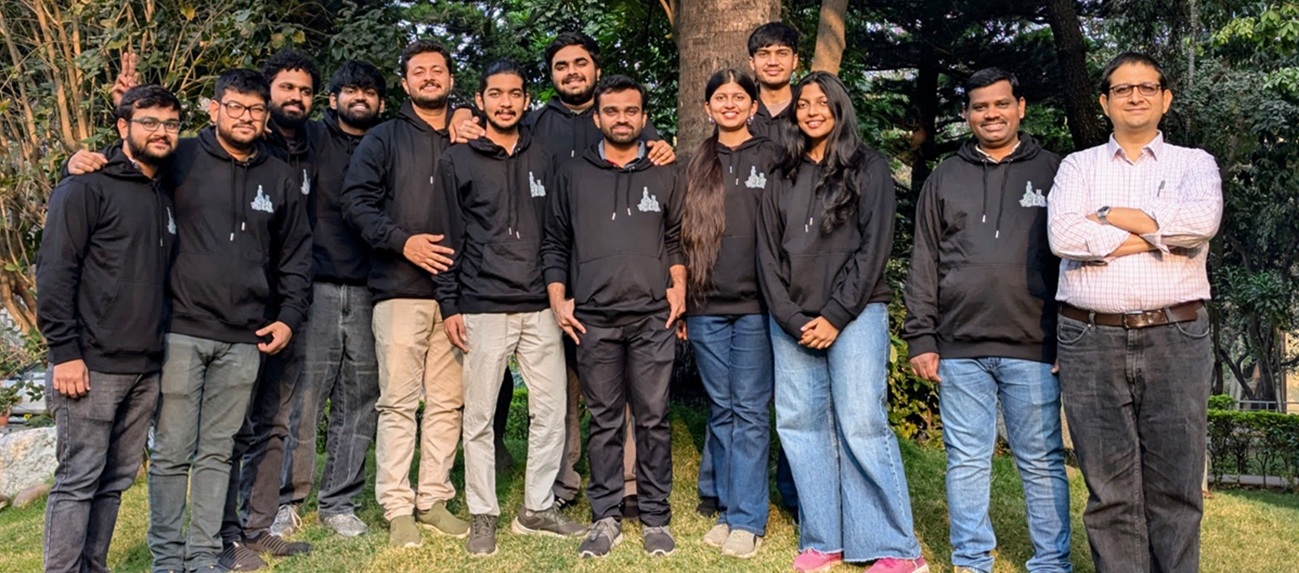
Saikat Chowdhury
Scientist-E

Ravikumar Reddi
Scientist-C

A Harikrishna
Sr. Technical Officer(3)

Sandeep Shrivastava
Sr. Technical Officer (3)
Sanjay Kumar Suman
Sr. Technical Officer(1)

Justus Francis
Junior Research Fellow

Pathri Achyutha Krishna
Junior Research Fellow

Palash Kumar Seal
Junior Research Fellow

Amarttya Bagchi
Junior Research Fellow
Sridhar S
Junior Research Fellow

Rishav Mitra
Project Associate-I
Publications
Title
Journal
Year
Structures reveal a key mechanism of WAVE regulatory complex activation by Rac1 GTPase
Nature Communications
2022
Structure of Arp2/3 complex at a branched actin filament junction resolved by single-particle cryo-electron microscopy.
Proceedings of the National Academy of Sciences, USA
2022
Arf GTPase activates the WAVE regulatory complex through a distinct binding site
Science Advances
2022
Structural basis of piRNA targeting.
Nature
2021
Cryo-EM reveals the transition of Arp2/3 complex from inactive to nucleation-competent state.
Nature Structural & Molecular Biology (https://doi.org/10.1038/s41594-020-0481-x)
2020
A guided approach for subtomogram averaging of challenging macromolecular assemblies.
Journal of Structural Biology:X (https://doi.org/10.1016/j.yjsbx.2020.100041)
2020
Structure reveals a mechanism of CRISPR-RNA guided nuclease recruitment and anti-CRISPR viral mimicry.
Molecular Cell (https://doi.org/10.1016/j.molcel.2019.02.001)
2019
The peroxisomal AAA-ATPase Pex1/Pex6 unfolds substrates by processive threading.
Nature Communications (https://doi.org/10.1038/s41467-017-02474-4)
2018
Cryo-electron tomography reveals that dynactin recruits a team of dyneins for processive motility.
Nature Structural & Molecular Biology (https://doi.org/10.1038/s41594-018-0027-7)
2018
Insights into autophagosome biogenesis from structural and biochemical analyses of the ATG2A-WIPI4 complex.
Proceedings of the National Academy of Sciences, USA (https://doi.org/10.1073/pnas.1811874115)
2018
The rod-shaped ATG2A-WIPI4 complex tethers membranes in vitro.
Contact (https://doi.org/10.11772515256418819936)
2018
Cas1 and the Csy complex are opposing regulators of Cas2/3 nuclease activity.
Proceedings of the National Academy of Sciences, USA (https://doi.org/10.1073/pnas.1616395114)
2017
The endoplasmic reticulum HSP40 co-chaperone ERdj3/DNAJB11 assembles and functions as a tetramer.
The EMBO Journal (https://doi.org/10.15252/embj.201695616)
2017
Structure reveals mechanisms of viral suppressors that Intercept a CRISPR RNA-guided surveillance complex.
Cell (https://doi.org/10.1016/j.cell.2017.03.012)
2017
The Pex1/Pex6 complex is a heterohexameric AAA+ motor with alternating and highly coordinated subunits.
Journal of Molecular Biology (https://doi.org/10.1016/j.jmb.2015.01.019)
2015
Structural organization of the dynein-dynactin complex bound to microtubules.
Nature Structural & Molecular Biology (https://doi.org/10.1038/nsmb.2996)
2015
Breaking symmetry in multimeric ATPase motors.
Cell Cycle (https://doi.org/10.4161/cc.28957)
2014
Nucleotide-induced asymmetry within ATPase activator ring drives Sigma54-RNAP interaction and ATP hydrolysis.
Genes & Development (https://doi.org/10.1101/gad.229385.113)
2013
Opening and closing of the bacterial RNA polymerase clamp.
Science (https://doi.org/10.1126/science.1218716)
2012
Engagement of arginine finger to ATP triggers large conformational changes in NtrC1 AAA+ ATPase for remodeling bacterial RNA polymerase.
Structure (https://doi.org/10.1016/j.str.2010.08.018)
2010
ADPase activity of recombinantly expressed thermotolerant ATPases may be caused by copurification of adenylate kinase of Escherichia coli.
The FEBS Journal (https://doi.org/10.1111/j.1742-4658.2008.06825.x)
2009
Regulation and action of the bacterial enhancer-binding protein AAA+ domains.
Biochemical Society Transactions (https://doi.org/10.1042/BST0360089)
2008