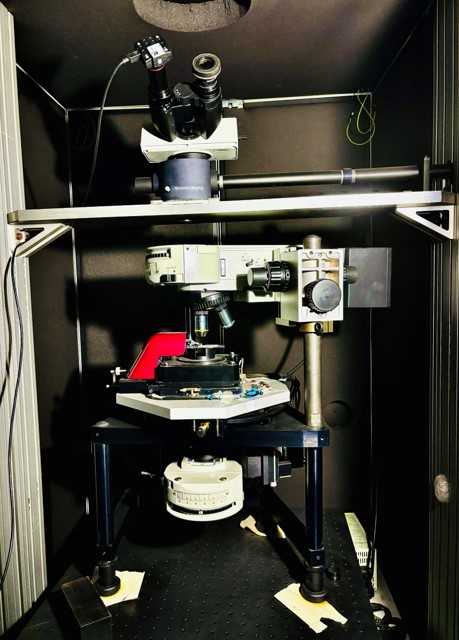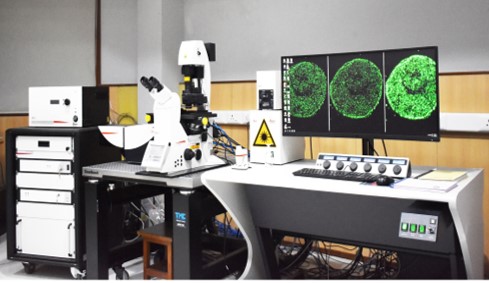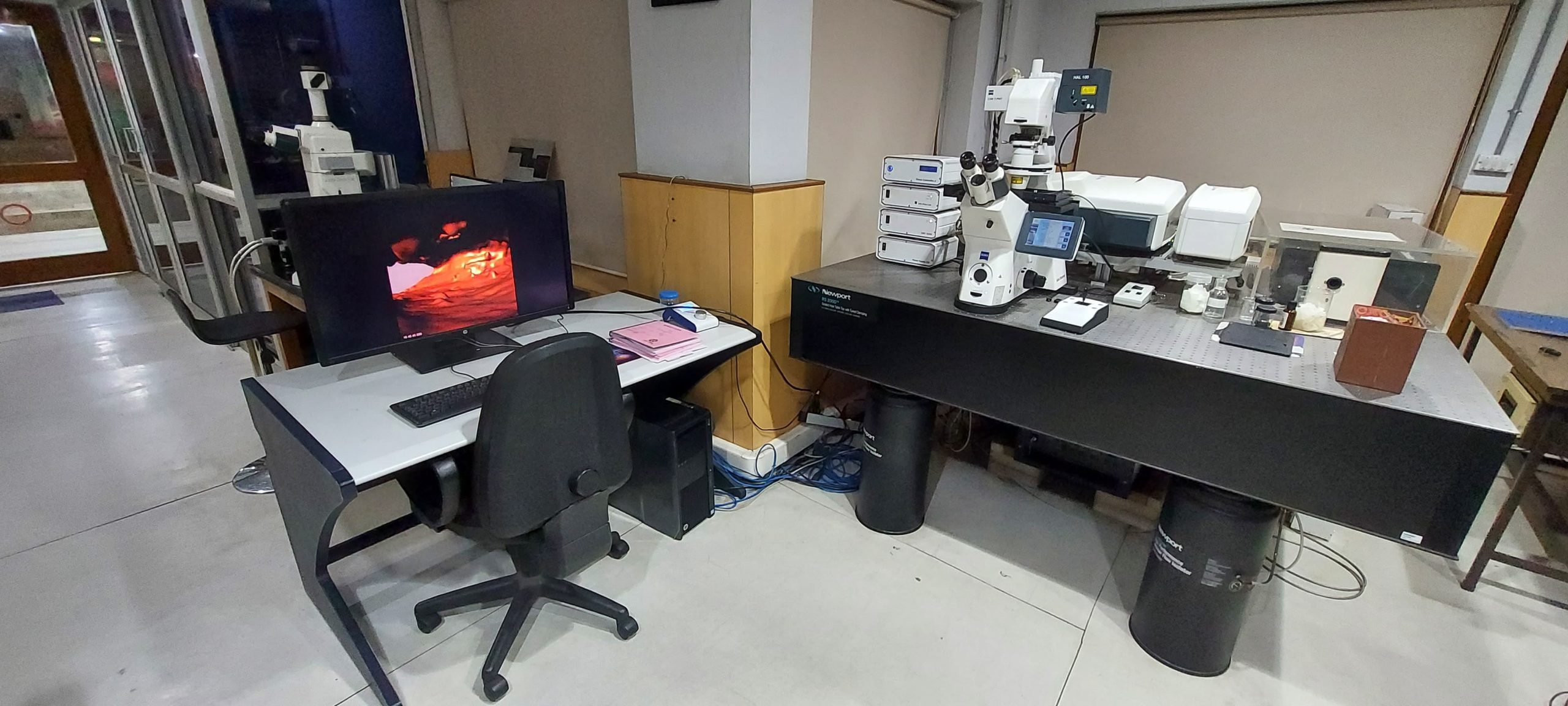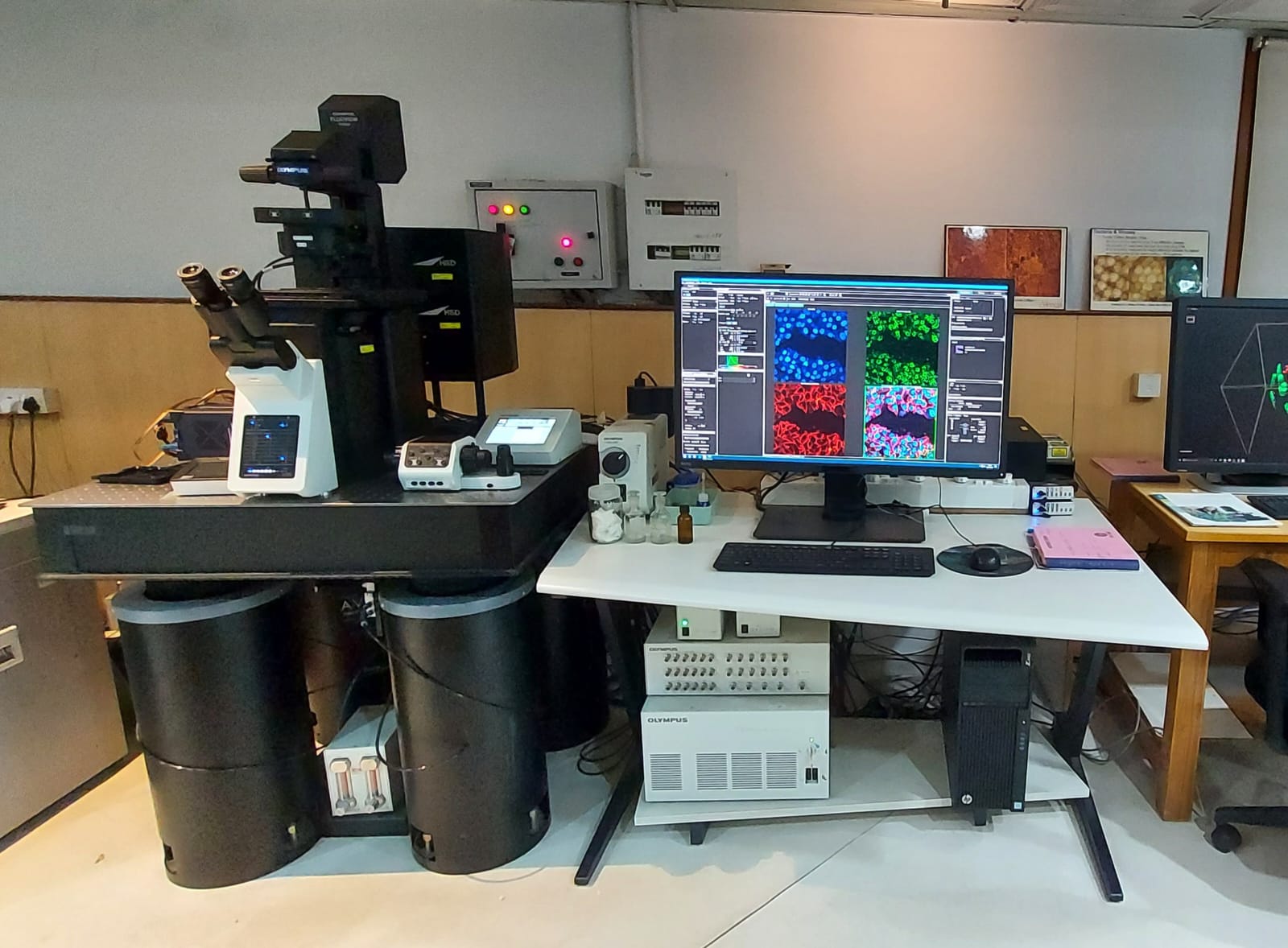

The Advanced Microscopy and Imaging Facility (AMIF) at the Centre for Cellular and Molecular Biology (CCMB) was established with one of the country’s first laser scanning confocal microscopes. Our state-of-the-art facility offers a wide range of biological imaging techniques, including confocal and multi-photon microscopes, a fluorescence correlation spectroscope, an atomic force microscope, super-resolution microscopes, Raman microscopes, light sheet microscopes, a live cell imaging system, TIRF microscopes, and various upright and inverted fluorescence microscopes featuring deconvolution software, high-speed, and 3D stereo imaging capabilities. This facility is open to both CCMB researchers and external users. You can find us in Room No. C-104 at the CCMB main campus. For detailed information regarding the instruments, please refer to the ‘Equipment’ tab.
Dr. Mahesh Nitla received his PhD in Biology (Protistology) from University of Pisa, Italy.
Google Scholar
Google Scholar
Google Scholar
AxioZoom V16 Zoom Microscope
3i Marianas LightSheet
AFM-Raman integrated system
Axio Imager Z2 with Apotome
Axio Imager Z2
Axio Zoom.V16
Leica 3x STED
LSM 880
Olympus FV3000
2. System Demonstrations
3. Examination
4. Confocal Hands-on Exercise (2-3 hours)
5. Submission of Assignments
6. Facility Access
This structured, point-wise program ensures that users receive comprehensive training,
theoretical knowledge, and hands-on practice to confidently operate imaging systems.
The Advanced Microscopy and Imaging Facility (AMIF) conducts an annual microscopy
course, offering hands-on training in cutting-edge imaging techniques. This intensive
program covers confocal, light-sheet, and super-resolution microscopy, with expert-led
sessions on sample preparation, image acquisition, and analysis. Designed for researchers
and students, the course provides a unique opportunity to explore the latest advancements
in microscopy and enhance imaging skills for biological research.
No safety button available
A number of genetic disorders are known to result from the defects in a single gene. Although rare in comparison to infectious diseases, genetic disorders cause enormous misery as many of them do not have a permanent cure. In the absence of specific treatment, molecular diagnosis, carrier detection and prenatal diagnosis or pre-implantation genetic diagnosis for these disorders with appropriate genetic counseling is the best approach to prevent their recurrence/transmission.
A number of genetic disorders are known to result from the defects in a single gene. Although rare in comparison to infectious diseases, genetic disorders cause enormous misery as many of them do not have a permanent cure. In the absence of specific treatment, molecular diagnosis, carrier detection and prenatal diagnosis or pre-implantation genetic diagnosis for these disorders with appropriate genetic counselling is the best approach to prevent their recurrence/transmission.
It is a long established fact that a reader will be distracted by the readable content of a page when looking at its layout.
This will close in 0 seconds