
Insights in immune systems at CCMB meeting shape newer therapies
Date : December 8, 2025
Share

Hyderabad, 8th Dec, 2025: CSIR–Centre for Cellular and Molecular Biology (CCMB), Hyderabad, recently hosted the India-EMBO Lecture Course on “Cell-Autonomous Defense and Innate Immunity” from3–5 December 2025. It brought together some of the world’s leading experts to discuss how our cells protect themselves from infection and damage. Instead of treating different immune processes separately, the meeting highlighted a major shift in the field: that a cell’s defense, clean-up machinery, and self-destruct programs are all tightly interconnected.
1. Cells defend themselves in more ways than we once understood.
Scientists shared evidence that all cells have a ‘first-responder system’ that can sense invading microbes, remove damaged components from cells, and activate emergency shutdown programs in cells when necessary. Understanding these early defense steps is helping scientists explain why some infections or inflammatory conditions become severe while others do not.
2. Immunity, autophagy, and cell death form a single coordinated network.
A major learning from the meeting was the growing consensus that innate immune signalling (body’s first line of non-specific defense against foreign bodies), autophagy (the cell’s clean-up and recycling system) and different forms of programmed cell death work together rather than as isolated pathways.
Many speakers emphasized that disturbances in one pathway can strongly affect the others, influencing diseases ranging from infections and autoimmune disorders to cancer and neurodegeneration.
3. Inflammatory cell death is more unified than previously thought.
Inflammatory cell death refers to the many mechanisms that immune cells use to kill foreign bodies. This includes processes like pyroptosis, apoptosis and necroptosis. These mechanisms differ from each other in how cells die. Talks by leaders in the field highlighted a unified mechanism linking these different mechanisms. This framework is reshaping how scientists think about how cells die during infection or inflammation, and how these processes might be targeted in developing new therapies.
4. Ubiquitin and autophagy are now seen as powerful immune tools.Experts presented new findings showing how cells tag, sequester, and clear invading microbes using the ubiquitin tagging system and the autophagy process. These internal “quality-control” systems are now recognized as central players in immunity, opening avenues for host-directed treatments that strengthen the body’s own defenses rather than targeting pathogens directly.
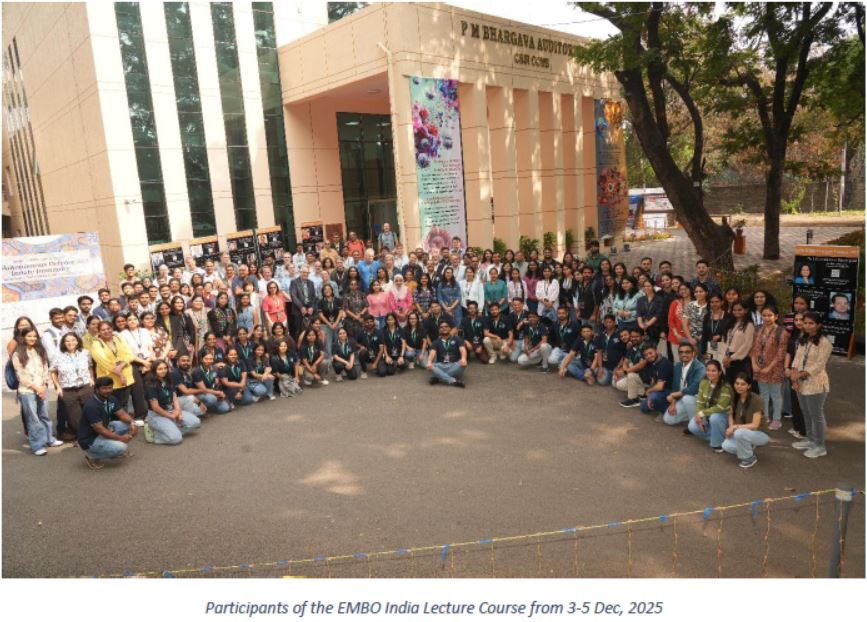
Participants of the EMBO India Lecture Course from 3-5 Dec, 2025
Beyond the new scientific insights, the meeting provided the early-career researchers an opportunity to interact directly with international leaders. Short talks, posters, and mentoring discussions fostered collaboration, curiosity, and confidence. Support measures such as travel grants and childcare assistance made the meeting more inclusive.
Dr Santosh Chauhan, Senior Principal Scientist at CCMB and the lead organizer of the meeting said, “By hosting this meeting, Indian researchers had direct exposure to the newest ideas and tools shaping global immunology. The discussions are expected to spark new collaborations and help accelerate research on infectious diseases, inflammation, and cell-based therapies within the country.”
For more details, please contact Dr Santosh Chauhan at schauhan.ccmb@csir.res.in.